
You don’t need a curling iron to wake up with soft, shaped waves. The key is getting the moisture level, section size, wrapping tension, and drying time right.
For reliable heatless curls, start with hair that is mostly dry and lightly damp, add a small amount of mousse or styling cream, then wrap even sections around a soft rod. Secure the hair without pulling, leave the set in until it is fully dry, and unwrap it gently before finishing with flexible-hold spray.
| What matters | A good starting point |
| Hair moisture | Mostly dry and lightly damp, not soaking wet |
| Setting time | Overnight or until every section feels fully dry |
| Loose waves | Larger sections around a thicker form |
| More definition | Smaller sections around a thinner form |
| Prep product | Light mousse or styling cream |
| Finishing product | Flexible-hold hairspray |
| Tension | Secure and even, never painful |
| Useful tools | Satin rod, socks, flexi rods, braids, or pin curls |
The basic principle stays the same across most methods. Hair is wrapped into a new shape and allowed to dry in that position. Section size and the diameter of the form help determine whether the result looks loose or defined.
What You’ll Need Before You Start
A dedicated curling set is optional. Several everyday items can create a similar result, so start with whatever feels comfortable to sleep in.
- A satin curling rod, flexi rods, long socks, or a soft robe tie
- A spray bottle for adding a small amount of moisture
- Hair clips for keeping sections organized
- Soft scrunchies or snag-free ties
- A light mousse, curl cream, or styling lotion
- A flexible-hold finishing spray
Skip heavy oils before wrapping if your hair loses shape easily. They can add weight before the set has formed. You can smooth a small amount through the ends after styling instead.
How to Get Heatless Curls Overnight in 7 Steps
- Bring your hair to the right moisture level. Start when it is mostly dry. If it feels completely dry and resistant to shaping, mist it lightly. Damp is enough. Wet sections may still be moist when you wake up.
- Apply a light styling product. Work a modest amount of mousse or styling cream through the mid-lengths and ends. Distribute it evenly instead of coating one section heavily.
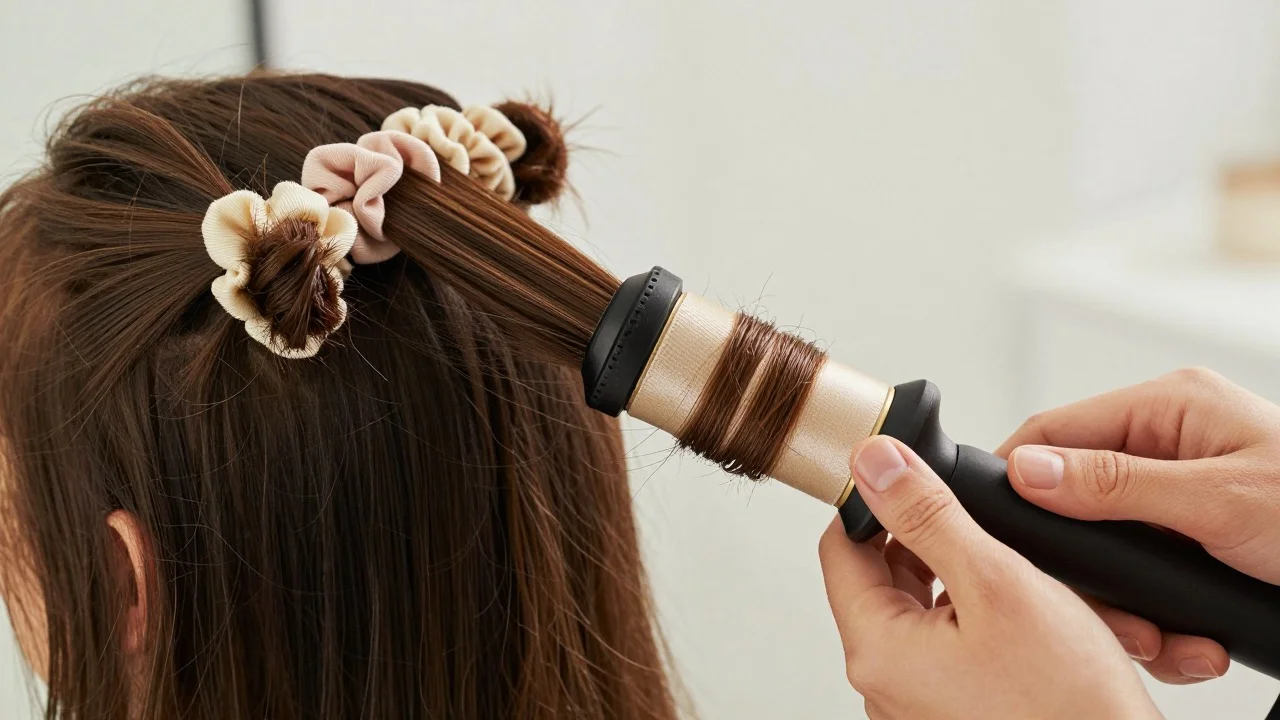
- Position your curling form. Place a satin rod or another soft form across the top of your head. Clip it temporarily if it slides while you begin wrapping.
- Wrap even sections around the form. Use smaller sections for more definition and larger sections for a softer bend. Smooth each section with your fingers before winding it around the rod.
- Secure the ends without pulling. Use soft scrunchies or ties. The wrap should feel stable while you move, but your scalp should not feel sore or tight.
- Leave the set in until it is fully dry. Overnight works well for many routines because it gives the hair several uninterrupted hours to set. Dryness matters more than watching an exact clock.
- Unwrap slowly and finish with your fingers. Remove the ties, unwind each side, and let the shape settle briefly. Separate the sections with your fingers, then use a light mist of flexible-hold spray if needed.
Resist brushing immediately after removal. A brush can stretch a fresh pattern into a much softer wave before you have a chance to see how the set naturally falls.
Choose a Method That Fits Your Hair
No single wrapping method suits every hair length, texture, or preferred finish. The table below gives you a practical starting point.
| Method | Often suits | Typical finish | Main consideration |
| Satin rod | Medium to long straight or wavy hair | Smooth, larger waves | Rod thickness strongly affects the shape |
| Socks or robe tie | Medium to long hair | Relaxed bends and waves | Knots can feel bulky during sleep |
| Flexi rods | Short to long hair, including textured hair | Smaller, more defined shapes | Requires more individual sections |
| Braids | Medium to long hair | Beachy or crimped waves | Produces less of a spiral pattern |
| Pin curls | Short to medium hair | Defined bends with root volume | Takes more clips and setup time |
Allure’s hairstylist guidance similarly notes that smaller forms and sections create tighter shapes, while larger ones produce looser results.
If you want more hair-focused styling techniques and related coverage, you can also browse more hair guides from Sophie Palmer.
Use This Curl-Control Cheat Sheet
Instead of changing your whole routine after a disappointing result, change one variable the next night.
| If you want… | Change this first | What it changes |
| A looser wave | Use larger sections or a thicker form | Creates a wider bend |
| More definition | Use smaller sections or a thinner form | Creates a tighter pattern |
| More root lift | Begin the wrap closer to the roots without pulling | Changes the starting angle |
| A smoother finish | Detangle and smooth each section before wrapping | Reduces tangles during removal |
| A less uniform look | Alternate the wrapping direction on some sections | Adds variation throughout the style |
This approach makes troubleshooting easier. If you change the moisture level, product, section size, and technique all at once, you won’t know which adjustment made the difference.
Why Heatless Curls Fall Flat or Turn Frizzy
If your heatless curls disappear quickly, the problem usually starts before you unwrap them. Use this table to narrow it down.
| Problem | Likely cause | Try next time |
| Shape falls within an hour | Sections were too large or had little styling support | Use smaller sections and a light mousse |
| Hair is still damp in the morning | It started too wet or the sections were too thick | Begin with drier hair |
| One side looks tighter | Section size or wrapping tension differed | Match the amount of hair on both sides |
| Ends look bent or kinked | Tips folded under the tie | Smooth and wrap the ends flat |
| Finish looks frizzy | Sections were tangled or handled too much after removal | Smooth before wrapping and separate gently |
| Roots look flat | The wrap began too far from the scalp | Start slightly higher without adding tension |
Humidity, hair texture, previous styling, and product weight can also affect how long a set holds. Treat the first attempt as a baseline rather than expecting every technique to work identically on every head of hair.
Is Heat-Free Styling Completely Damage-Free?
Skipping hot tools removes a common source of thermal stress, but a heat-free method can still be rough on your hair if you pull too tightly.
The Canadian Dermatology Association advises limiting both excessive heat and high-tension hairstyles because they can contribute to hair damage and breakage. A nighttime wrap should therefore feel snug rather than tight.
Pay extra attention around the temples and front hairline. If those sections naturally grow in different directions, forcing them flat can create unnecessary tension. StyleVanta’s guide to styling a widow’s peak offers more ideas for working with the natural front hairline rather than against it.
Soft ties also help. If you wake up with scalp soreness, dents, or pulling around the hairline, loosen the setup next time.
Make Your Next Attempt a Simple Test
Pick one method tonight and keep the setup simple. If the result is too loose, reduce the section size tomorrow. If it is too tight, use a larger form. If it never fully sets, start with less moisture.
That one-change-at-a-time approach makes it much easier to find a routine that suits your hair length, texture, and sleeping comfort.
For more practical hair and beauty guidance, explore StyleVanta’s hair and beauty coverage and build your routine around techniques you can repeat comfortably.
Frequently Asked Questions
Should Hair Be Wet or Dry for Overnight Styling?
Start with hair that is mostly dry and only lightly damp. Hair that is too wet may remain damp inside the wrap by morning. If your hair is already dry, a light mist can provide enough moisture for shaping.
How Long Should I Leave the Curlers In?
Leave them in until the wrapped sections are completely dry. Overnight is convenient for many people. Six to eight hours is a common starting range, but thicker or wetter sections may need longer.
Do Heatless Curls Work on Short Hair?
Yes, but a large satin rod may be awkward to use on shorter lengths. Smaller flexi rods, pin curls, or mini twists give you more control because they require less hair to wrap around each form.
How Can I Make the Style Last Longer?
Use a small amount of lightweight styling product before wrapping. Let the hair dry fully, remove the form gently, and avoid brushing immediately. Finish with a flexible-hold spray if your hair tends to lose shape.
Can a Heat-Free Set Cause Breakage?
It can if the hair is wrapped too tightly or secured with harsh elastics. Keep the tension comfortable, use soft ties, and stop if the setup pulls at your scalp or hairline.