
Choosing a mother-of-the-bride outfit should start with the wedding itself, not with a rigid list of traditional rules. Look at the dress code, venue, season, colour palette, and your own comfort. Then choose a dress or polished alternative that feels special enough for the occasion while still feeling like you. Also worth reading: Wedding Ring.
Choose your outfit after the wedding’s formality and colour direction are clear. Coordinate with the bridal party without copying it. Pick a length and fabric suited to the venue, then check fit while sitting and walking. For Canadian weddings, also plan for changing temperatures, outdoor conditions, shipping, and alterations.
| Decision | Practical starting point |
|---|---|
| Colour | Complement the wedding palette without matching the bridesmaids exactly |
| Length | Floor-length for many formal events; midi or tea-length for flexible styling |
| Silhouette | A-line, sheath, column, wrap-inspired, or a tailored jumpsuit |
| Fabric | Chiffon, crepe, satin, lace, or other occasion-ready fabrics |
| Canadian weather | Plan outerwear, footwear, and layers before finalizing the outfit |
| Shopping online | Check CAD pricing, measurements, returns, shipping origin, and final-sale terms |
How to Choose a Mother of the Bride Dress for the Wedding
Start with the invitation and venue. A black-tie ballroom wedding calls for a different outfit than an afternoon garden ceremony or relaxed destination celebration.
Formality should guide your fabric, hemline, detailing, and accessories. A floor-length crepe or satin gown can suit an evening event. A polished midi may make more sense for a daytime ceremony or outdoor venue.
Current Canadian retailers show a wide mix of A-line gowns, sheaths, chiffon dresses, lace styles, sequined options, and jumpsuits. That variety makes personal preference more useful than following one prescribed silhouette.
If you like softer shapes, StyleVanta’s flowy dress shopping guide for Canada explains how fabric, length, and waist placement change the finished look.
Which Dress Style Works Best? Compare the Main Options
No silhouette works for every person. Instead, compare how each style fits your preferred level of structure, movement, and formality.
| Style | Strong points | Trade-offs | Consider it when |
|---|---|---|---|
| A-line | Defined upper shape with room through the skirt | Full skirts can feel formal in heavier fabrics | You want a classic shape with easy movement |
| Sheath | Clean line and less skirt volume | Fit through the waist and hips needs close attention | You like a streamlined look |
| Column | Polished and suited to formal fabrics | Offers less volume through the lower half | You want understated evening formality |
| Flowing midi | Comfortable movement and versatile footwear | May feel too relaxed for strict black tie | The wedding is daytime, garden, or semi-formal |
| Tailored jumpsuit | Modern, easy to move in, distinctive | Fabric and tailoring need to feel occasion-ready | You prefer trousers over a dress |
| Lace or embellished gown | Adds visual interest without many accessories | Heavy detailing can affect comfort | The event calls for a dressier finish |
Verdict: For the broadest range of Canadian weddings, a well-fitted A-line or softly structured midi is a practical starting point. For strict formal events, a floor-length gown may better match the setting. Choose the option that lets you sit, walk, eat, greet guests, and dance comfortably.
Choose a Colour That Coordinates Rather Than Copies
The safest approach is to ask the couple about colours they want reserved for the wedding party. You don’t need to wear the same shade as the bridesmaids.
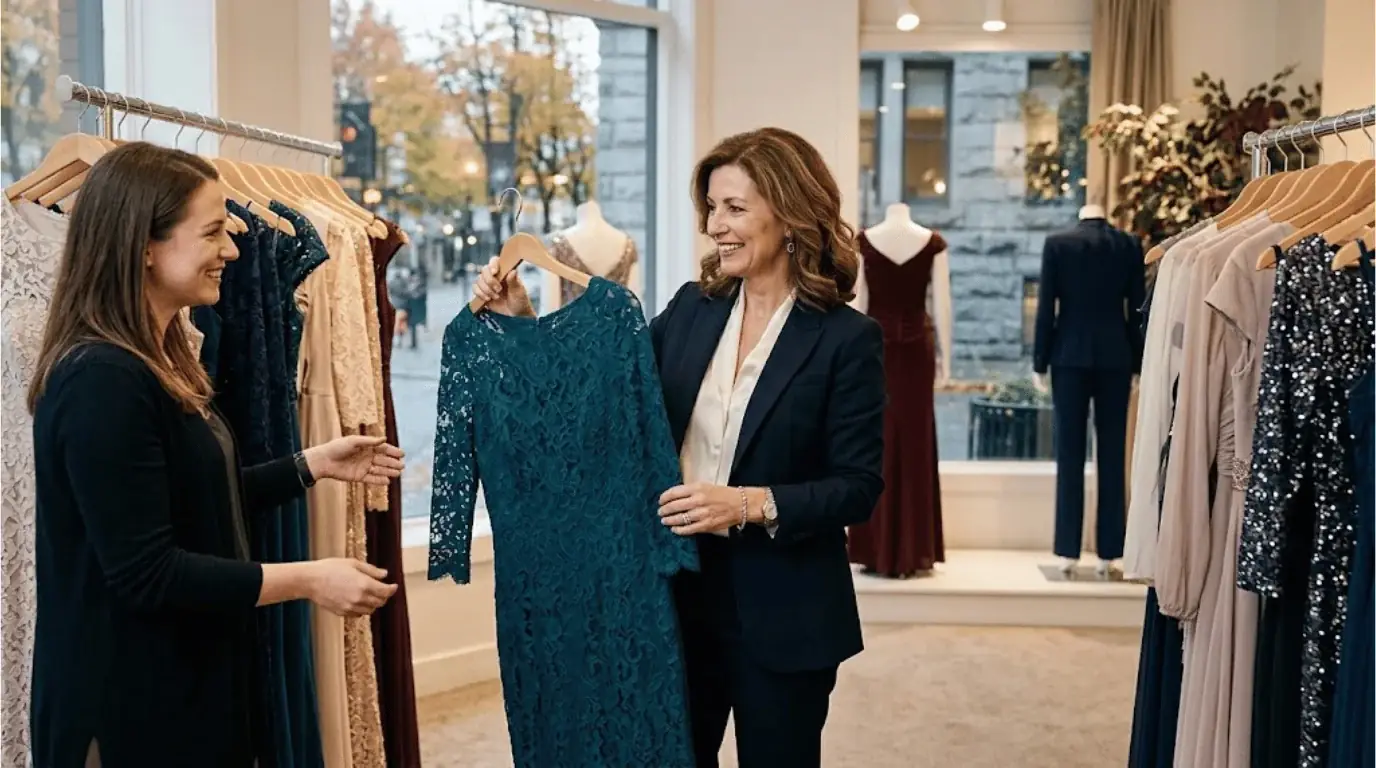
If they are wearing dusty blue, for example, navy, slate, plum, or another complementary colour could create distinction in photographs. A warm wedding palette may work with burgundy, bronze, forest green, or muted rose.
White, ivory, and shades that photograph as bridal deserve extra care. There is no need to guess. If a pale champagne, blush, silver, or cream-toned dress seems close to the bridal palette, show the bride a photo before buying.
Black can also work, particularly for evening and formal weddings. Modern etiquette sources place more emphasis on communication, dress code, and the couple’s preferences than old colour rules.
Match the Length and Fabric to the Venue
A dress can look right online yet feel wrong once the weather and venue conditions come into play. For a formal hotel or ballroom wedding, floor-length satin, crepe, chiffon, or embellished fabrics can fit the setting. For a garden event, a midi or tea-length hem may be easier on grass and uneven ground.
At a warm summer wedding, check whether chiffon or lace is lined and breathable enough for the day. For spring and fall events, make sure the sleeves allow room for a light jacket or wrap.
Canadian winter weddings require an extra layer of planning. Think about the route from the car to the ceremony, photographs, and reception. A beautiful floor-length hem may be less convenient around snow, slush, or wet pavement.
For softer outdoor styles, StyleVanta’s boho dresses guide has useful ideas on balancing flowing fabrics with cleaner accessories and weather-ready layers.
Fit for the Whole Day, Not Only the Fitting-Room Mirror
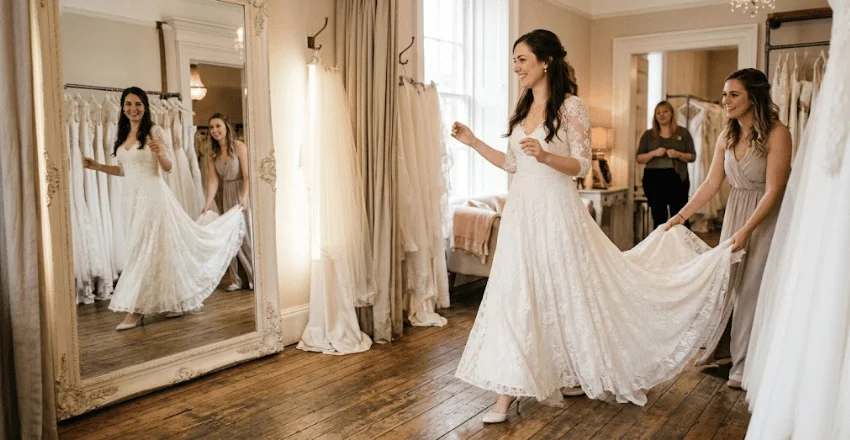
Wedding days involve more movement than a five-minute fitting suggests. You may spend hours standing, sitting, hugging relatives, posing for photographs, eating, and dancing.
When trying on a dress, sit in it. Walk quickly. Lift your arms. Bend enough to see whether the neckline shifts. Test the shoes you expect to wear.
Pay special attention to:
- arm and shoulder movement;
- waist comfort while seated;
- bra and undergarment compatibility;
- hem clearance with your chosen shoes;
- scratchy lace, sequins, or beading;
- zippers or closures you can manage;
- whether the fabric creases quickly.
Alterations can improve the final result, so avoid judging a promising dress only by its first unaltered fit. At the same time, tailoring should refine the garment rather than rescue an unsuitable size or uncomfortable design.
Coordinate With the Other Parent Without Dressing Alike
The two mothers don’t need matching dresses, colours, or lengths. They should look as though they are attending the same wedding. Sharing a photo before buying can prevent accidental duplication. It also helps both people judge formality.
One may wear navy while the other chooses plum. One might select lace while the other wears crepe. Similar formality with distinct styling usually looks more natural than trying to create a matched pair.
Coordination with the wedding party follows the same principle. Aim to be part of the photographs without looking like another bridesmaid.
Shop Early Enough for Returns and Alterations
Begin once the bride’s outfit, venue, and general dress code are clear. Giving yourself extra time reduces pressure if the first choice doesn’t fit as expected. Canadian online shoppers should look beyond the product photo. Before paying, confirm the following details.
- whether the price is shown in Canadian dollars;
- the retailer’s size chart and garment measurements;
- shipping origin and expected delivery details;
- return shipping costs and return windows;
- final-sale restrictions;
- possible taxes or cross-border charges;
- fabric composition and care instructions.
Current Canadian shopping pages show that occasionwear pricing can vary widely, so comparing construction, fabric, fit options, and return terms is more useful than choosing by price alone.
Finish the Look Without Letting Accessories Take Over
Once the dress works, accessories should support it rather than compete with it. An embellished neckline may need little more than earrings and a simple bracelet. A clean crepe or satin dress can carry a bolder necklace, a textured clutch, or a decorative shoe.
Choose footwear according to both the venue and how long you expect to stand. Outdoor weddings may favour a block heel, wedge, polished flat, or another stable option.
Hair should also work with the neckline and weather. StyleVanta’s half-up, half-down hair guide includes wedding-friendly pinned styles, while its hair spray guide for Canadian conditions covers hold, humidity, and styling for formal events.
A Simple Final Check Before You Buy
Before committing, ask five questions:
- Does the outfit match the wedding’s level of formality?
- Does the colour coordinate without copying the bridal party?
- Can I sit, walk, eat, and dance comfortably?
- Will the fabric, hem, shoes, and outerwear work for the Canadian season and venue?
- Do I still like the outfit when I ignore the label and trend description?
If all five answers are yes, you probably have a stronger choice than a dress selected because tradition says it is what a bride’s mother “should” wear.
Next step: shortlist your two strongest options and photograph each with the planned shoes and accessories. Compare the full outfits, then show the bride your preferred choice before removing tags or passing a return deadline.
Frequently Asked Questions
What should the mother of the bride wear?
Choose an outfit that matches the wedding’s dress code, venue, season, and colour direction. A gown, midi dress, sheath, A-line style, or polished jumpsuit can all work when the level of formality is right.
What colour should the bride’s mother wear?
There is no required colour. Navy, jewel tones, muted pastels, metallic neutrals, greens, blues, burgundy, and other occasion shades can work. Coordinate with the wedding palette and check pale, bridal-looking shades with the bride first.
Does the bride’s mother have to match the bridesmaids?
No. Coordination usually looks more intentional than an exact match. Choose a complementary shade or a different depth within the broader palette.
Can she wear a midi dress?
Yes. A polished midi can work well for cocktail, semi-formal, daytime, garden, and many formal weddings. A strict black-tie event may call for a floor-length option.
Should the mothers of the bride and groom match?
They do not need to match. Sharing dress photos and agreeing on a similar level of formality can help them coordinate while keeping their individual styles.
What should Canadian shoppers check before ordering online?
Check measurements, CAD pricing, shipping origin, delivery timing, returns, final-sale conditions, fabric composition, care instructions, and potential cross-border charges before ordering.