

Orange hair can range from soft copper and natural ginger to peach, tangerine, and vivid neon. The right result depends on your starting color, preferred depth, and tolerance for upkeep. If the warmth appeared accidentally after bleaching, blue-toned products usually target orange more effectively than purple ones. Also worth reading: Blue Hair.
| What you want | Shades to consider | Commitment | Starting point |
| Natural warmth | Copper, ginger, amber | Medium | Dark blonde to medium brown |
| Soft fashion color | Peach, apricot, strawberry-copper | Medium | Blonde or pre-lightened |
| Rich, deeper color | Rust, burnt orange, blood orange | Medium to high | Light brown to pre-lightened |
| Bright statement color | Tangerine, sunset, neon | High | Light or pre-lightened |
| A small change | Face frame, balayage, peekaboo pieces | Low to medium | Most bases, depending on brightness |
TL;DR: Choose the Depth Before the Brightness
- Copper and ginger are easier to wear if you want a natural-looking warm result.
- Peach and apricot usually show most clearly on a light base.
- Tangerine and neon shades need more upkeep and often need pre-lightening.
- If your color turned brassy after bleaching, identify whether you see orange or yellow before choosing a toning product.
12 Orange Hair Shades That Feel Wearable
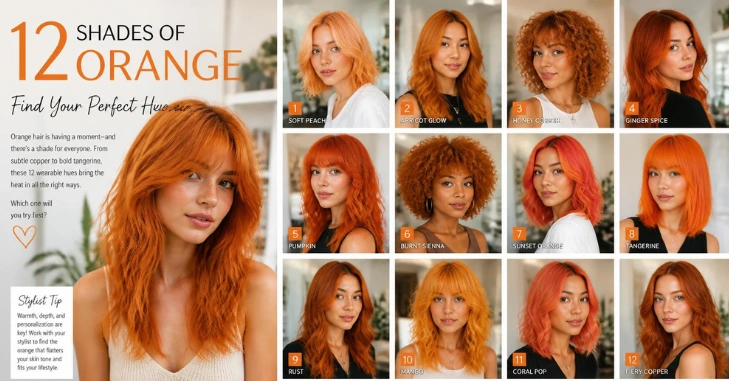
The color family is much broader than a single bright citrus tone. Current inspiration guides range from muted copper and peach through intense tangerine and red-orange finishes.
- Soft copper: Copper mixes red, gold, and orange tones without looking fluorescent. It works well if you want warmth that still feels close to a natural redhead shade.
- Natural ginger: Ginger is lighter and softer than deep copper. It pairs orange warmth with golden undertones for a fresh finish that does not dominate your whole look.
- Strawberry-copper: This shade sits between strawberry blonde and copper. It is a useful option for blondes who want warmth without jumping straight to vivid color.
- Apricot: Apricot combines soft orange with a creamy golden tone. It creates a lighter result and can look especially delicate on blonde or pre-lightened lengths.
- Peach: Peach brings a hint of pink into the mix. It is softer than tangerine and works well for people who want a pastel fashion shade.
- Burnt orange: Burnt orange is deeper and browner than bright citrus shades. The extra depth can make it easier to pair with darker roots and autumn-inspired styling.
- Pumpkin spice: Think warm copper with brown and golden depth. It can add richness without requiring the intense saturation of a bright fashion color.
- Blood orange: Blood orange leans redder and richer. Wella Canada describes the shade family as a bright blend of red, copper, and orange tones.
- Tangerine: Tangerine is clear, saturated, and energetic. It shows most strongly on a lighter base and suits anyone who wants the color itself to be the focal point.
- Orange balayage: Warm ribbons through brown or dark blonde hair add dimension without coloring every strand. Read StyleVanta’s balayage vs. highlights guide when deciding how much contrast you want.
- Face-framing citrus pieces: Bright pieces around the face give you a strong color effect with less coverage. They are also easier to change than a full-head application.
- Sunset melt: A sunset blend combines orange with red, gold, or yellow. Keeping darker roots can add depth while letting the brighter tones stand out through the lengths.
Choose Your Shade Around Your Starting Color
Your natural or current base affects what a dye can show. Deposit-only color adds pigment but does not lighten dark hair. StyleVanta explains the same limitation in its semi-permanent hair colorguide. On blonde or pre-lightened hair, peach, apricot, tangerine, and other bright tones can appear clearly. Dark blonde and light brown bases are usually better suited to copper, ginger, rust, and deeper warm shades.
Orange hair: On dark brown or black hair, a deposit-only formula may create a warm tint rather than a bright result. Significant brightness often requires lightening first.
Skin undertone can help you narrow the shade, but it should not become a rigid rule. Warm undertones often pair easily with golden copper and tangerine. Cooler undertones may prefer peach, rose-copper, or redder variations. Neutral and olive complexions can experiment with both groups. Depth, saturation, makeup, clothing, and placement can change how the final color reads.
Pick the Right Level of Color Commitment
You do not need to start with permanent dye.
Temporary color is useful if you want to test a shade for an event, photo, or weekend. Many temporary formulas sit near the surface and wash away quickly. StyleVanta’s temporary hair dye guide explains the main formats and limitations.
Semi-permanent color gives you more time with the shade without making the same commitment as oxidative permanent color. It is useful for testing copper, peach, and other fashion tones on a suitable base.
Permanent color makes more sense when you want a longer-term change or need a formula designed to alter natural pigment. Review StyleVanta’s permanent hair dye guide before choosing that route.
Whichever formula you choose, test a hidden strand first. A strand test shows how your current base, porosity, and previous color affect the result.
How to Keep Warm Color Looking Fresh
Bright warm pigments can lose intensity as you wash and heat-style your hair. Your routine can slow that visible fading.
- Wash only as often as your scalp and hair need.
- Use lukewarm rather than excessively hot water.
- Choose shampoo and conditioner intended for color-treated hair.
- Limit unnecessary high-heat styling.
- Use heat protection when you do style with hot tools.
- Consider a compatible color-depositing conditioner between full refreshes.
- Protect your lengths from excessive sun exposure when practical.
Porous or previously lightened sections may take color differently from healthier hair. They can also release pigment unevenly, so refresh the sections that need it rather than automatically recolouring everything.
How to Fix Unwanted Warmth After Bleaching
Intentional citrus color and accidental brassiness need different solutions. If bleaching leaves your hair distinctly orange, blue pigment is the usual color-wheel counterpoint. Purple products are aimed primarily at yellow tones. StyleVanta’s purple shampoo guide explains why violet is useful for yellow, while blue is better suited to orange warmth. Davines Canada gives the same blue-versus-purple distinction in its color-correction guidance.
Do not assume more bleach is the automatic fix. The correct next step depends on your current level, target shade, and hair condition. If the color is patchy, heavily processed, stretchy, or breaking, pause home correction. A professional colorist can assess whether you need toner, deeper color, gradual lightening, or time for the hair to recover.
A Canadian Safety Note for At-Home Cooking
Follow the directions supplied with the exact product you buy. Health Canada notes that relevant permanent and semi-permanent hair dyes carry warnings and patch-test instructions because sensitivity can develop over time.
Complete the product’s recommended skin test before each use. Do not use scalp hair dye on eyebrows or eyelashes, and stop using a product if you develop a concerning reaction. Pre-lightening adds another chemical process, so avoid stacking treatments without considering the condition of your hair and scalp.
Your Next Step
Start by choosing between three directions: natural copper or ginger, soft peach or apricot, or bright tangerine andred-orange. Save two or three reference photos taken in natural-looking light. Compare them with your current base, then decide how much lightening and maintenance you are comfortable with.
Orange hair: Suppose you are coloring at home; strand-test first and follow the product directions closely. If your hair already has several layers of dye or bleach, take your references to a colorist and plan the change around its current condition. A strong result is not about choosing the brightest shade. It is about choosing the depth, placement, and level of commitment you will still enjoy after the first week.
Frequently Asked Questions
Does this color family suit every skin tone?
It can be adjusted for many complexions by changing depth, warmth, and saturation. Copper may feel natural, while peach looks softer and tangerine creates more contrast.
Do I need bleach before using an orange dye?
Not always. A naturally light base may accept many warm shades without bleaching. Dark hair usually needs some lightening to achieve a bright or pastel result.
What color cancels orange hair?
Blue is the usual counter-color for orange brassiness. Purple targets yellow more directly. Check what tone you can see before buying a toning shampoo or conditioner.
How quickly will a warm fashion shade fade?
There is no single timeline. Formula type, starting base, porosity, wash routine, heat use, and previous chemical services all affect color retention.
Can I try the color without changing my whole head?
Yes. Temporary color, extensions, peekaboo sections, face-framing pieces, or a small balayage placement can show how the shade works with your complexion and wardrobe.