

Rose gold hair can be soft and barely pink, warm and coppery, or deep enough to work with a brunette base. The key is matching the tone and placement to your starting colour, undertone, and appetite for upkeep. Current inspiration pages also favour balayage, rooted colour, rose brown, peach, and blush variations rather than one fixed formula. You might also like Jet Black Hair.
Rose gold is a warm, dimensional hair colour that blends soft pink with golden, copper, or blonde tones. The most flattering version depends on your starting colour, undertone, and maintenance tolerance. Blondes can go pale and rosy, while brunettes often suit deeper rose-brown, coppery, balayage, or ombré versions.
| Quick question | What to know |
| What creates the colour? | Pink mixed with gold, blonde, copper, or peach tones. |
| Easiest starting point | Light blonde or previously lightened hair |
| Brunette-friendly choices | Rose brown, copper-pink, balayage, or coloured ends |
| Softer grow-out | Rooted balayage or ombré |
| Main upkeep issue | Pink tones can fade faster than the underlying base. |
| Lower-commitment route | Temporary or semi-permanent colour before a full change |
What Does Rose Gold Hair Actually Look Like?
The colour sits between natural warm shades and creative pinks. Gold and copper keep it from reading as flat pastel pink, while the rosy element gives it a softer fashion-colour finish. Rose gold hair: The balance can shift. More peach or copper creates warmth, while dusty pink or mauve gives a cooler effect.
Hair.com describes the shade as a customizable mix of blonde, pink, and gold, while current Redken inspiration includes bronzy, strawberry, peach, blush, smoky, and platinum variations. That flexibility is useful because you don’t need to copy one exact salon photo. Choose the depth, warmth, and amount of visible pink that suit your existing colour.
Match the Shade to Your Starting Colour
Your current base has a major effect on the finished result. Pale colours show more clearly on light hair, while dark hair usually needs either lightening or a deeper formula.
| Starting colour | Practical direction | Likely commitment |
| Light blonde | Blush, champagne-pink, peach, or soft metallic tones | Low to medium |
| Dark blonde or light brown | Warm pink-gold highlights, caramel-rose, or balayage | Medium |
| Medium brown | Rose brown, copper-pink, or brighter lightened pieces | Medium |
| Dark brown or black | Deep rosy tones, coloured ends, or pre-lightened sections | Medium to high |
| Auburn or red | Strawberry, copper-rose, or peach-pink blends | Medium |
L’Oréal notes that lighter blonde bases can accept many rosy shades with less preparation. Darker bases may require lightening to achieve a pale or vivid result. Brunettes can also choose brown-based versions when they want less contrast.
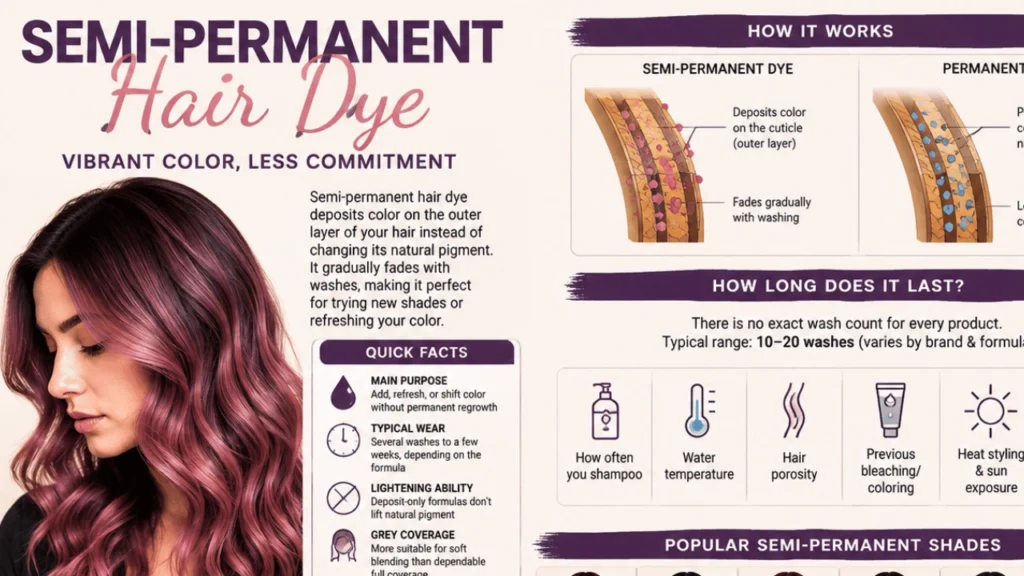
If you want colour that fades gradually rather than a permanent change, StyleVanta’s guide to semi-permanent hair colour explains what deposit-only formulas can and cannot do. StyleVanta notes that these formulas generally add tone rather than lighten a dark natural base.
Choose the Temperature Around Your Undertone
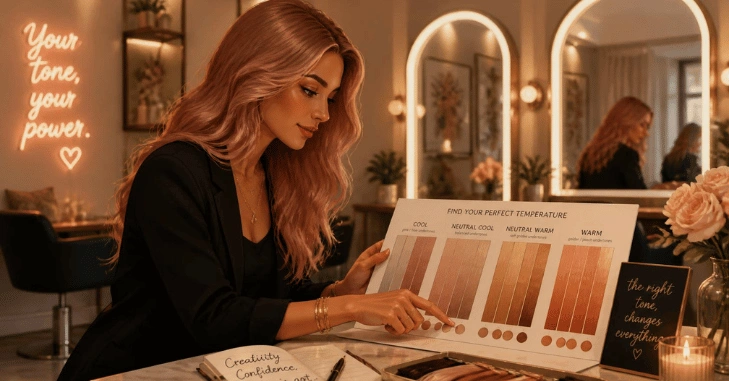
Warm and olive undertones often pair well with peach, caramel, copper, and golden-pink formulas. Cooler undertones can suit blush, dusty pink, or mauve-leaning versions. Neutral undertones give you more room to move between the two. This isn’t a rigid colour rule. The goal is to avoid a shade that makes your complexion look dull or disconnected from the rest of your colouring.
Hair.com and Wella both recommend adjusting the balance of pink and gold to suit the wearer’s undertone. Bring two or three reference photos to your appointment. Choose examples with a starting colour similar to yours, rather than simply choosing images you like in isolation.
Pick a Placement That Fits Your Upkeep
Placement changes both the effect and the grow-out. A full head gives the strongest transformation, while selective colour lets more of your natural base remain visible.
| Technique | Finished effect | Grow-out |
| All-over colour | Uniform pink-gold finish | Most noticeable at the roots |
| Balayage | Hand-painted brightness through selected pieces | Soft |
| Ombré | Darker roots moving into coloured lengths and ends | Soft |
| Highlights | Dimension without colouring every strand | Moderate |
| Dip-dyed ends | Colour concentrated at the bottom | Easy to change or trim |
Rooted looks and coloured ends are recurring lower-maintenance choices in current Redken guidance. StyleVanta’s ombré hair guide also explains why keeping the natural root area can make regrowth less prominent. If you dislike frequent root appointments, ask for a shadow root, balayage, or dark-to-rosy gradient rather than a pale shade from the scalp to the ends.
Test Your Commitment Before Going All In
You don’t need to begin with permanent colour. StyleVanta’s temporary hair dye guide covers washout options designed for short-term wear, though porous or bleached strands may hold pigment longer than expected. Semi-permanent colour gives you a longer trial while still fading with washing.
A deeper gloss or tinted conditioner may also help you determine whether warmer pink tones suit you. A lasting transformation is different. If you want major lightening, dependable root coverage, or a long-term change, read StyleVanta’s guide to permanent hair dye before deciding which route fits your goal.
How to Keep the Colour Looking Fresh
Fashion shades tend to show fading clearly, especially when the pink element starts to soften. Your routine can influence how quickly that happens. Wella identifies frequent washing, high heat, UV exposure, and harsh cleansing as factors that can speed up colour fading.
- Wash as often as your scalp needs, but avoid unnecessary extra washes.
- Use lukewarm water and products made for colour-treated hair.
- Apply heat protection before blow-drying, curling, or straightening.
- Reduce repeated high-heat styling when you can.
- Ask your colourist whether a tinted conditioner, gloss, or toner suits your formula.
A rooted or deeper shade may also remain visually wearable longer because fading and regrowth create less contrast.
What to Tell Your Colourist
Start with your natural or current colour, then describe the result in practical terms. Say whether you want warm or cool pink, how much of your natural root you want visible, and how often you’re willing to return. A useful request could be:
“I want a soft copper-pink tone with my natural root kept visible. I want the grow-out to stay subtle.” That gives your colourist more useful information than simply asking for a trend name. Please also mention any previous bleach, permanent colour, box dye, or other chemical services. Your colour history can affect how easily you can reach the target shade.
Choose the Result Before You Choose the Formula
Start with three decisions: how light you want to go, how much pink you want to see, and how much upkeep you’re prepared to accept. Then choose a technique that works within those limits. Save references that resemble your starting colour and discuss your colour history with a qualified stylist before major lightening. A well-chosen blush, copper, rose-brown, or rooted finish can give you the rosy metallic effect without forcing every wearer into the same shade.
Conclusion
Rose gold hair is not limited to one colour formula or one type of wearer. The best result depends on your starting hair colour, skin undertone, desired level of pink and warmth, and how much maintenance you are willing to manage. Light blondes can achieve delicate blush and champagne-pink shades, while brunettes can explore rose brown, copper-pink balayage, ombré, and other dimensional options.
Before choosing your formula, decide how dramatic you want the transformation to be and how often you want to refresh your colour. Rooted balayage, ombré, and deeper rose-gold shades can offer a softer grow-out, while pale and vivid pink tones may require more regular maintenance. By choosing a shade and technique that work with your natural base, you can enjoy a flattering rose gold finish that feels stylish, personalised, and easier to maintain.
Frequently Asked Questions
Does Rose Gold Hair Need Bleach?
Not in every case. Someone starting with pale blonde hair may be able to add the desired tone without major lightening. Dark hair generally needs some lightening for a bright pastel result. Deeper rose-brown or copper-pink options can reduce how much the base needs to be lifted.
Can Brunettes Wear This Colour?
Yes. Rose brown, caramel-pink, coppery balayage, highlighted pieces, and coloured ends can all work with a brunette base. A pale pink-blonde transformation usually involves more lightening than these darker versions.
How Long Will the Colour Stay Fresh?
There isn’t one timetable for every formula. Longevity depends on the type of dye, starting condition, porosity, washing routine, and the amount of heat or UV exposure. Pink tones can become softer between appointments, so your colourist may suggest a gloss or colour-depositing product.
Which Option Has the Softest Grow-Out?
Balayage, ombré, and other rooted placements usually create less obvious regrowth than an all-over pale colour. Keeping part of your natural root also reduces the contrast as new hair grows.
Should I Patch-Test Hair Dye?
Follow the product directions. Health Canada states that permanent and semi-permanent hair dyes covered by its guidance should include patch-test instructions and advises users to repeat the test before each use. Stop using the product if the test area develops redness, itching, burning, blistering, or irritation.