
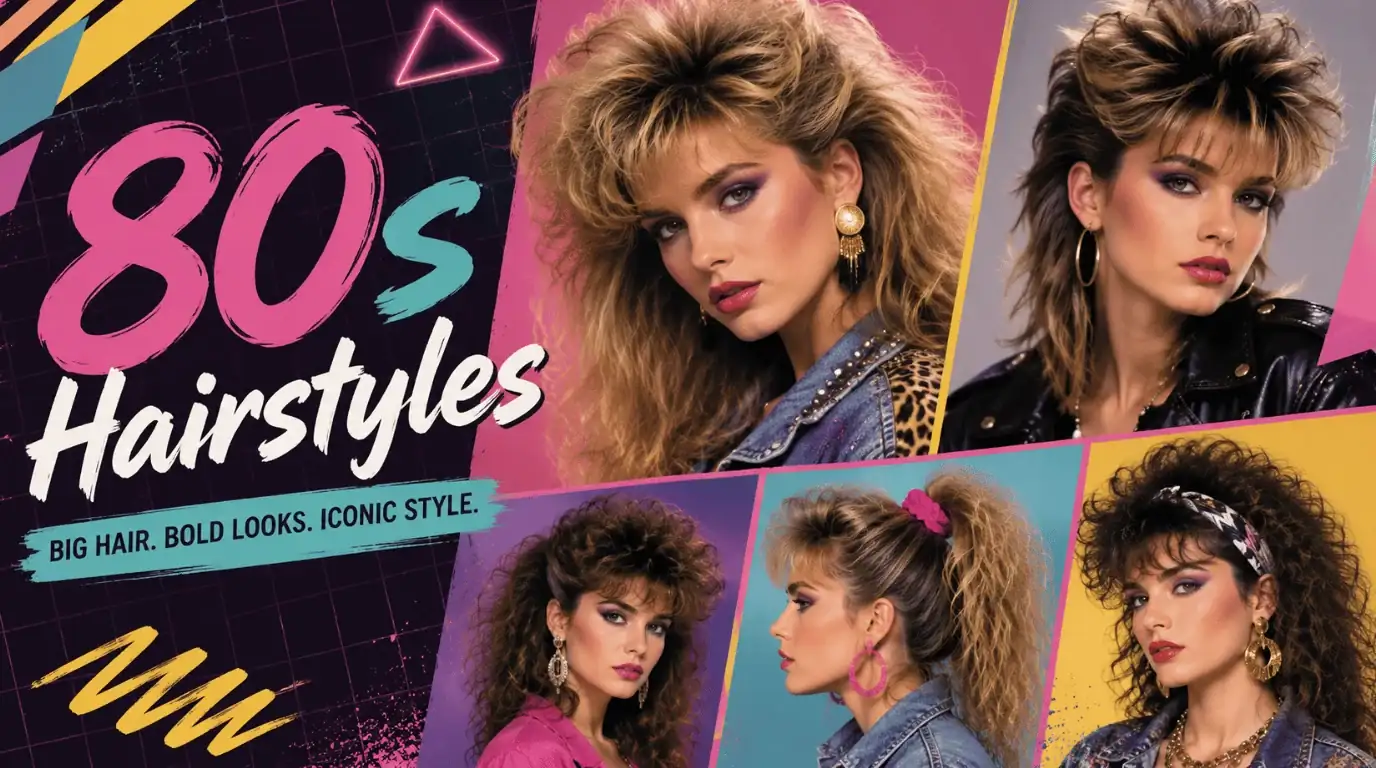
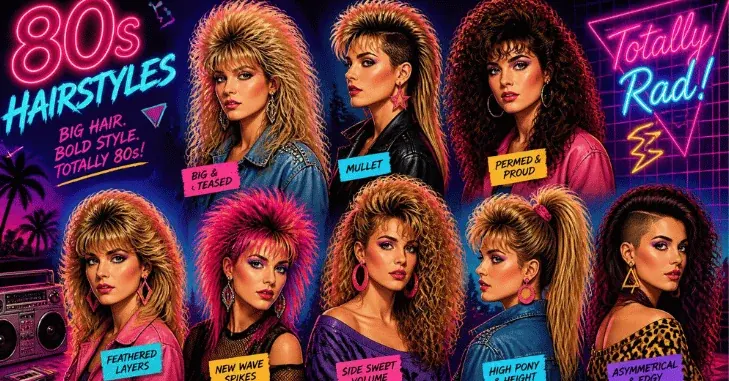
The best 80s hairstyles were built around volume, texture, movement, and personality. Think fluffy curls, dramatic bangs, high ponytails, crimped lengths, mullets, and heavily layered shapes. You can borrow those ideas today without recreating every stiff, sprayed detail of the original decade.
Modern ’80s-inspired hair works best when you keep one signature feature and soften everything around it. Choose crown volume, curls, a high ponytail, crimped texture, or strong layers. Then use lighter styling products and less teasing. The result feels retro without looking like a costume.
| 80s Hairstyles | Signature feature | Modern approach | Works well for |
| Big blowout | High volume | Softer movement and lift | Medium to long hair |
| Voluminous curls | Fully rounded shape | Defined natural texture | Curly and coily hair |
| Crimped hair | Zigzag texture | Crimp selected sections | Medium to long hair |
| High-side pony | Height and asymmetry | Cleaner base and soft ends | Medium to long hair |
| Mullet | Short front, longer back | Blended layers | Short to medium hair |
| Feathered layers | Swept movement | Softer face framing | Medium and long hair |
| Mall bangs | Tall front volume | Controlled lifted fringe | Hair with bangs |
What Made 80s Hairstyles So Distinctive?
Hair in the 1980s often emphasized size and visible texture. Perms, teased roots, crimping, high ponytails, mullets, Jheri curls, hi-top fades, and dramatic bangs all became associated with the decade. Scrunchies, bows, headbands, and banana clips also played a major part.
Current revivals usually reduce the stiffness. Recent beauty coverage still points to layers and volume as defining elements, while 2026 trend coverage shows renewed interest in large, bouncy blowouts and other ’80s references. That makes the decade easier to borrow from today. You don’t need maximum height, permanent curls, and heavy hairspray at the same time.
12 80s Hairstyles Worth Revisiting
1. The Big Bouncy Blowout
A full blowout is one of the easiest ways to reference the decade without looking overly themed. Concentrate the lift around the roots and crown, then give the lengths a rounded bend. For a softer current finish, keep the surface movable instead of spraying it solid. StyleVanta’s guide to creating a bouncy blowout at home explains sectioning, dryer direction, brush tension, and controlled heat.
2. Full, Fluffy Curls
Big curls were central to many recognizable looks of the period. Whitney Houston’s voluminous curls remain one of the era’s frequently referenced examples.
Today, you can keep natural curls airy instead of forcing them into a uniform pattern. Focus on shape, root lift, and curl definition while allowing some softness around the perimeter.
3. Crimped Texture
Crimping creates the small zigzag pattern closely linked with retro hair. Rather than crimping every strand, try using the texture through selected lengths or underneath the top layer. That gives straight or wavy hair extra body while keeping the finish easier to wear. Modern trend coverage also suggests pairing crimped sections with braids or twists.
4. High Side Ponytail
The side ponytail delivers an instant retro reference with little commitment. Position the pony above or behind one ear and secure it with a scrunchie.
Keep the roots smooth if you want a cleaner result. Add soft curls or waves to the pony for more movement. A slightly lower placement makes the idea easier to wear outside a themed event.
5. Modern Mullet
The mullet remains one of the decade’s most recognizable cuts. Traditional versions kept the sides shorter while leaving more length toward the back. Current versions often blend the transitions and use more texture. Ask for a shape that suits your natural density instead of copying a vintage photo exactly.
6. Feathered Layers
Feathering creates outward movement around the face and gives longer hair visible width. It works especially well when you want retro volume without a perm. Start with a layered cut, then direct front sections away from the face using a round brush. StyleVanta’s guide to long layers and face framing can help you decide how much shaping suits your length.
7. Lifted Statement Bangs
Tall bangs were a defining feature of many late-’80s looks. Historically, the fringe was often teased upward and fixed with hairspray. For a modern version, use a round brush or roller to create height at the root. Keep the ends softer so the front has movement rather than forming one rigid section. You might also like 80s Fashion in Canada.
8. Half-Up Hair With Crown Volume
Half-up styling gives you height while leaving much of your length visible. Gather a shallow crown section, secure it high, and gently loosen the roots. This option is useful if you like the decade’s proportions but don’t want a full teased style. StyleVanta’s half-up hair guide includes options for different lengths, densities, and textures.
9. Rocker Shag
The rocker shag uses choppy layers, movement, and a less polished surface. Joan Jett’s shag remains a common reference when modern beauty publications revisit the decade. Keep the layers connected if you want a softer result. Natural waves or a light-texture product can supply movement without excessive backcombing.
10. Sculpted Short Hair
Not every ’80s look required long hair. Shortcuts could feature strong height, defined sides, asymmetric shapes, or textured tops.
This approach works well if you prefer a lower-maintenance length but still want a clear retro influence. Your cut creates most of the shape, so daily styling can stay fairly simple.
11. Hi-Top Fade
The hi-top fade became an important Black hairstyle during the decade and partly replaced the earlier popularity of the Jheri curl as the 1980s progressed. Modern interpretations can adjust the height, fade, and top shape. A barber can tailor those proportions to your hair density, curl pattern, and preferred level of upkeep.
12. Scrunchie Updo
Scrunchies were one of the era’s defining accessories. They appeared with high ponytails, side ponytails, and other gathered styles. For an easy modern version, create a high ponytail or loose half pony and add one fabric scrunchie. Let the accessory provide the retro signal instead of adding several period details at once.
How to Make ’80s Hair LookModern
A useful rule is to choose one exaggerated feature. If the crown has major volume, keep the ends softer. If you’re crimping the lengths, keep the fringe simple. If you choose a strong mullet shape, use an understated finish.
Hair condition matters too. Teasing, repeated high heat, tight elastics, and aggressive brushing can cause unnecessary stress. Use heat protection when working with hot tools and avoid rebuilding the style again and again during the day.
The cut should also suit your natural texture. Straight hair can gain volume through layers and blow-drying. Waves can work with feathered shapes or a shag. Curly and coily textures already provide much of the fullness associated with the era.
Styling Retro Hair Through Canadian Weather
Canadian weather can change how high-volume styling behaves. Humid summer days may make straightened or carefully shaped sections expand or lose definition. Use lighter layers of styling product rather than coating the hair at once. In dry winter air, static may become a bigger issue, especially after removing a toque.
A high ponytail or tall crown can also clash with winter headwear. If you’ll be outside for long periods, choose a lower half-up style or focus the retro detail through your lengths instead. The goal is a hairstyle you can maintain through your real day, not only for the first ten minutes after styling.
What You Need for an Easy ’80s-Inspired Style
You don’t need a cabinet full of products. Start with a few tools that match the finish you want:
- A blow dryer and round brush for volume
- Heat protectant before hot-tool styling
- Large rollers for crown lift
- A curling iron or wand for soft curls
- A crimping tool for zigzag texture
- A comb for controlled root teasing
- Flexible-hold hairspray
- Scrunchies, clips, or headbands for finishing
Use the least aggressive method that gives you the effect. A roller or round brush can create height without repeated backcombing.
Pick One Retro Detail and Make It Yours
You don’t have to reproduce an old photograph strand for a strand. The most wearable approach is to identify what you like about the decade and adapt that feature to your own hair. Start with volume if you want drama.
Try a high ponytail for something easy. Choose feathered layers or a shag if you want the haircut itself to carry the reference. Whatever you choose, build the style around your texture, routine, and Canadian weather rather than forcing your hair into a shape it won’t comfortably hold.
Frequently Asked Questions
What were the most popular 80s hairstyles?
Popular looks included big permed hair, fluffy curls, mullets, crimped lengths, high and side ponytails, tall bangs, Jheri curls, hi-top fades, mohawks, and feathered styles. Volume and visible texture connected many of these looks.
How do you make your hair look ’80s without getting a perm?
Build volume temporarily. Blow-dry the roots upward, use large rollers or a curling tool, and add light teasing where needed. Finish with a flexible hold. You can also use a high ponytail, scrunchie, or crimped section for a faster retro reference.
Is crimped hair from the 1980s?
Crimped hair became strongly associated with the decade and appeared alongside other texture-heavy styles. Modern versions often use smaller sections instead of crimping the full head.
Can short hair get an ’80s-inspired look?
Yes. Try a textured mullet, sculpted crop, short shag, lifted fringe, or high-textured top. The decade included both long, voluminous styles and distinctive shorter cuts.
How can I wear retro hair without looking like I’m in costume?
Keep one recognizable reference and simplify the rest. Choose volume, a side ponytail, a shag, crimping, or a bold accessory. Modern clothing and softer styling will keep the result current.