
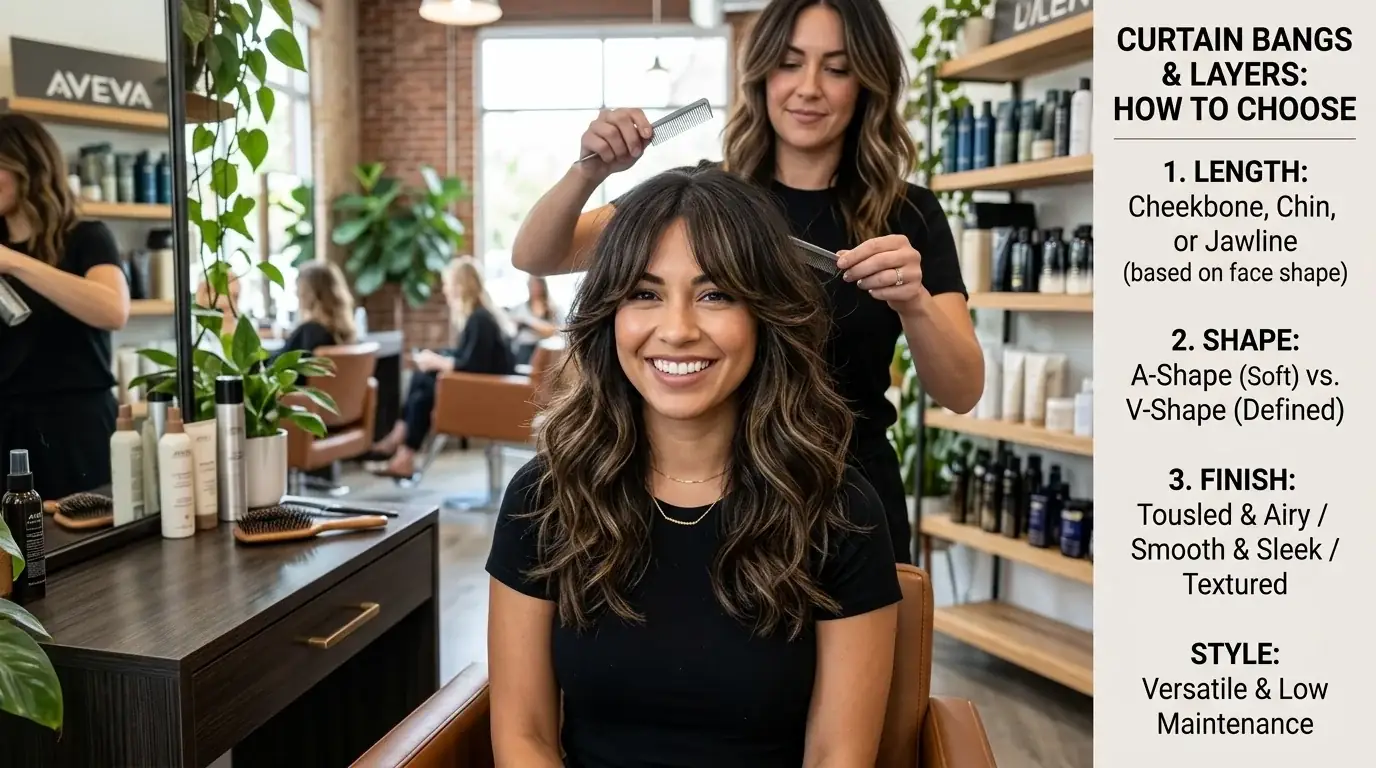
Curtain bangs with layers create a soft face frame while keeping movement through the rest of your haircut. The fringe opens around the forehead, then blends into longer pieces near the cheekbones, jaw, or shoulders. The combination can work with short, medium, or long hair when the length and amount of layering suit your texture and density.
The most wearable version connects the shortest front pieces gradually into the rest of the haircut. Start longer if you want an easier grow-out. Fine hair usually needs restrained layering, while thick, wavy, or curly hair may benefit from more controlled shaping.
| Decision | Practical starting point | Watch for |
|---|---|---|
| Fringe length | Cheekbone-skimming or slightly shorter | Going shorter than your normal styling routine allows |
| Layer placement | Blend the front into face-framing sections | A visible gap between fringe and longer hair |
| Fine hair | Keep more fullness through the ends | Excessive thinning |
| Thick hair | Remove selected bulk for movement | Heavy sides with little shape |
| Wavy or curly hair | Plan around the finished dry position | Cutting based only on wet length |
| Short hair | Use longer, softer front pieces | A fringe that overwhelms the haircut |
| Daily styling | Shape the roots while damp | Waiting until the front has dried in the wrong direction |
| Canadian weather | Keep the front flexible and movable | A rigid shape that collapses under hats or humidity |
How Curtain Bangs With Layers Work Together
Curtain bangs usually start shorter near the centre and become longer toward the sides. Layers continue that progression through the rest of the haircut.
The result works best when there is no hard stopping point between the fringe and the longer pieces. A stylist can create a gradual transition around the cheekbones, jawline, or collarbone.
That connection is what separates a cohesive layered cut from bangs added to an unrelated shape. StyleVanta’s long layers guide explains how layer placement changes movement while preserving length.
Current 2026 hair coverage also favours lighter, more movable fringe shapes that blend into face-framing pieces instead of forming a thick block across the forehead.
Choose the Fringe Length Before You Choose the Layers
The shortest piece affects the entire cut. Decide where you want it to sit when your hair is dry.
A shorter centre section places more attention around the eyes and brows. A cheekbone-length fringe gives you more room to sweep the hair aside. Chin-length pieces feel closer to face framing and can be easier to tuck away.
If you are nervous about commitment, start longer. You can shorten the centre later, but correcting a fringe that feels too short takes time.
Longer versions can also transition into face-framing pieces as they grow. That makes them practical if you like changing your haircut through the year.
Match the Shape to Your Hair Length

Long hair
Long hair gives a stylist plenty of room to build a gradual transition. The front can begin around the cheekbones and connect into longer sections through the sides.
This pairing works especially well when you want movement without sacrificing much overall length. For more guidance on keeping long hair full while adding shape, see StyleVanta’s guide to long layers.
Medium-length hair
Shoulder and collarbone lengths can create a balanced frame because the fringe does not have far to travel before meeting the main haircut.
A layered lob is one option. You can keep the perimeter fairly strong and add movement around the face. StyleVanta’s lob haircut guide covers blunt, textured, layered, and fringe-based variations.
Short hair
Short cuts leave less space between a fringe and the perimeter. Keep the transition deliberate so the front does not overpower the shape.
A layered bob can work with longer curtain pieces, especially if you want softness around a structured outline. If you are considering a shorter cut, compare the options in StyleVanta’s bob haircut guide.
Let Hair Density Decide How Much Layering You Need
Fine hair and low-density hair are not always the same, but both can look sparse when too much weight is removed.
Ask for restrained layering if preserving fullness is your priority. A stronger perimeter with a few carefully placed face-framing sections can create movement without making the bottom look thin.
Thick hair can often support more internal shaping. Removing selected weight may help the fringe connect to the sides instead of sitting above a heavy block of hair.
Texture matters too. Straight hair tends to show cutting lines clearly, while waves and curls create their own movement. Curly or coily hair should be planned around its dry shape because the finished length may sit higher than it appears while wet.
Face Shape Is a Starting Point, Not a Rule
You do not need a specific face shape to wear this style. The shortest point, part, volume, and direction can all change the visual effect.
For a round face, longer front pieces can create more vertical movement around the cheeks. Current Vogue guidance also points to long hair with movement and curtain fringe as one option for rounder face shapes.
A longer face may suit a fuller fringe that adds width around the upper face. Square or heart-shaped faces can use softer ends and gradual framing around the cheekbones or jaw.
Oval faces have room to experiment with several lengths. Still, your density, hairline, natural part, and daily routine should guide the final choice.
Check Your Natural Part and Hairline
A centre opening may look simple in a photo but behave differently if your roots grow strongly to one side.
Look at what the front does after washing. A cowlick can push one side upward, while a strong natural part may keep the fringe from splitting evenly.
You do not have to fight that pattern. A slightly off-centre opening can still create the same soft effect.
If your natural growth makes a centre split difficult, a side-swept fringe may require less daily correction. StyleVanta’s side bangs guide explains how the shortest and longest points affect the sweep.
How to Style the Front Without Making It Stiff
Start while the hair is damp. The roots are easier to redirect before they dry into their natural position.
Use this simple routine:
- Place your part while the front section is still damp.
- Dry the roots forward or across the forehead first to reset their direction.
- Divide the fringe where you want it to open.
- Use a round brush or your fingers to guide each side away from the face.
- Let the longer pieces follow the movement of the surrounding layers.
- Finish with a small amount of light styling product if you need hold.
Avoid loading the front with oil, wax, or heavy cream. Too much product can make the pieces separate or lose bounce.
Straight hair may benefit from a soft round-brush bend. Waves can often use their natural pattern. Curly hair may need finger shaping or diffusing instead of being pulled straight during drying.
Make the Cut Work Through Canadian Seasons
A haircut can look different in January than it does in July.
During Canadian winters, a fitted toque can flatten the roots or bend a shorter fringe. Longer pieces are easier to push aside, restyle, or blend back into the haircut after removing a hat.
Dry indoor heating can make flyaways and static more noticeable. Keep rich products away from the roots if they make the fringe separate too quickly.
Summer humidity can change a polished blowout within minutes. If your hair naturally waves or curls in humid weather, ask for a shape that still looks intentional when that texture returns.
The practical goal is not a fringe that behaves perfectly in salon conditions. It is one that still works after commuting, wearing a hat, or air-drying on a busy morning. StyleVanta makes a similar weather-conscious distinction in its Canadian haircut coverage.
What to Tell Your Hairstylist
A reference photo helps, but a short salon brief is more useful than asking for an exact copy.
Cover these points with your stylist.
- Where you want the shortest piece to fall.
- How long the outer fringe should be.
- Whether you usually wear a centre or off-centre part.
- How much overall length you want to keep.
- Whether your priority is fullness, movement, or weight removal.
- How your hair behaves when air-dried.
- How much styling time you will spend each morning.
Bring photos with hair texture and density similar to yours. The same fringe can sit quite differently on fine straight hair and dense waves.
If you like highly layered movement, StyleVanta’s butterfly haircut guide is another useful reference before your appointment.
Maintenance and Growing the Fringe Out
The front usually loses its intended shape sooner than long layers because small changes in fringe length are more visible.
You may not need a full haircut every time. Ask your stylist whether a fringe reshaping between regular appointments makes sense for your cut.
StyleVanta’s side-fringe guidance notes that defined bangs may need attention around every four to six weeks, while its long-layer guide allows longer intervals for softer layered shapes.
Growing the fringe out is usually straightforward when the outer edges already connect into the sides. The shortest sections gradually become cheekbone, jaw, and then face-framing pieces.
Choose a Shape That Fits Your Normal Routine
A flattering haircut should still make sense after the salon blowout is gone. Choose the shortest point, amount of layering, and styling commitment around your real hair.
If you want softness with flexibility, start with longer front pieces and gradual layers. You can always make the shape stronger at a later appointment.
Before booking, save two or three reference photos and note where you want the shortest piece to land. Then browse StyleVanta’s related haircut guides so you can explain the shape, length, and maintenance level you want.
Frequently Asked Questions
Do curtain bangs with layers work on fine hair?
Yes, but keep the layering controlled. Removing too much hair can make fine or lower-density ends look thinner. Ask for enough weight through the perimeter and use the layers mainly to create movement around the face.
Can you wear curtain bangs without a center part?
Yes. A slightly off-center opening can create a similar effect and may work better with your natural growth pattern.
Are they suitable for curly hair?
They can be. The stylist should account for the curl pattern and finished dry length. Leaving more length at the front gives curls room to spring upward without becoming shorter than planned.
What is the difference between curtain fringe and face-framing layers?
A curtain fringe creates a defined shorter section around the forehead. Face-framing layers usually begin lower and connect more directly to the main haircut. The two can overlap when the fringe is kept long.
Are longer bangs easier to maintain?
They are often more forgiving because they can be swept aside, tucked back, or blended into surrounding hair. Shorter pieces show growth sooner.
Should I cut this style at home?
Small styling adjustments are safer than changing the shape yourself. The center length controls how the outer sections blend, so one short cut can alter the entire frame.