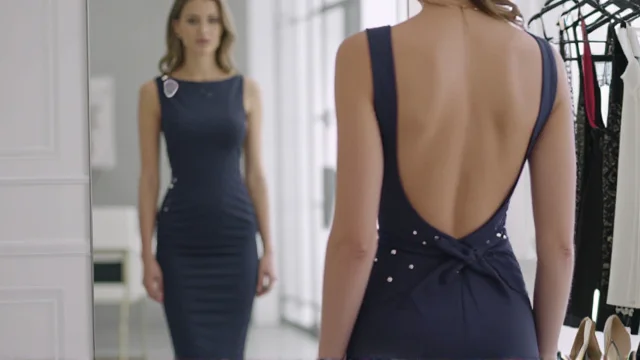

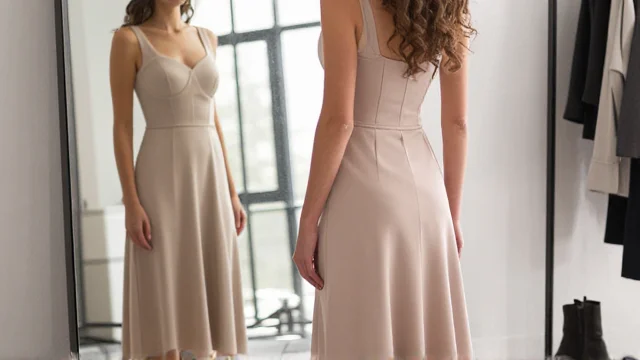
An empire waist dress has a fitted upper section with a seam placed just below the bust. The skirt falls from that raised point instead of the natural waist. This construction can create a longer visual line while leaving more room through the midsection. The best version depends on bust fit, torso length, fabric, and hem.
That makes seam placement more important than a body-shape label. A well-proportioned raised waist can feel comfortable and polished, while a seam that lands too high or low can make the same silhouette feel awkward.
| What to check | Good starting point | Why it matters |
|---|---|---|
| Waist seam | Sits securely below the bust | Controls the proportion of the whole dress |
| Bodice | Smooth without pulling or gaping | Keeps the raised seam in position |
| Skirt | Falls cleanly from the seam | Prevents unwanted bunching or excess volume |
| Length | Midi for broad versatility | Works with many shoes and Canadian seasons |
| Fabric | Soft drape with enough structure | Changes movement, formality, and layering |
| Online fit | Use garment measurements | Size labels vary between retailers |
Key takeaway: Start with the seam, the bust, and the way the skirt falls. Then choose the length and fabric around your climate and plans. A beautiful colour or print cannot compensate for a bodice that shifts, pulls, or places the raised seam in the wrong spot.
What Defines This Raised-Waist Silhouette?
The defining feature is the placement of the waist seam. It sits beneath the bust rather than at the natural waist. From there, the lower section falls toward the hem with varying amounts of flare, gathering, or drape.
That construction makes the shape different from many dresses that create their narrowest point at the natural waist. It can also create extra room through the stomach and hips without requiring an oversized garment.
The final effect depends heavily on fabric. Crisp cotton may produce a clearer shape, while chiffon, viscose, satin, or soft crepe can create more movement. A gathered skirt also looks fuller than one cut with a cleaner, narrower line.
How to Choose an Empire Waist Dress That Fits Well
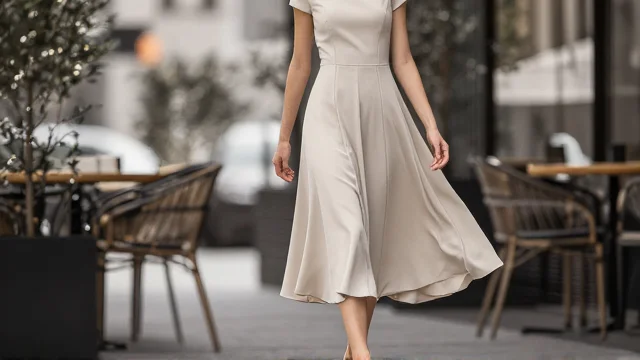
Ignore rigid rules that assign one dress shape to one body type. Two garments carrying the same style name can fit completely differently. The most useful approach is a seam, bust, and fall test.
- Check the seam. It should sit beneath the bust without riding upward or dropping toward the natural waist. Raise your arms and sit down to see whether it stays in place.
- Check the bust. Look for pulling, flattened fabric, gaping, or a neckline that shifts. Adjustable straps, stretch panels, or different cup proportions can change the fit.
- Check the fall. The skirt should drop cleanly from the raised seam. Too much stiff gathering can create volume, while fabric with more drape usually falls closer to the body.
Torso length deserves attention too. Petite shoppers may find that a long bodice places the seam too low. Someone with a longer torso or fuller bust may need more length through the upper section.
Alterations can fix some hem problems, but bodice proportions are harder to correct. When shopping online, prioritize the upper fit before worrying about whether a midi needs a few centimetres removed.
Empire, A-Line, Fit-and-Flare, or Babydoll?
These terms sometimes appear beside similar-looking product photos, but the waist placement changes how each design feels.
| Silhouette | Where shape is created | Typical skirt | Useful when you want |
|---|---|---|---|
| Empire | Directly below the bust | Straight, gathered, or softly flared | A raised visual waist and easy lower fit |
| A-line | Often near the natural waist | Gradually widens toward the hem | Moderate structure with lower-body room |
| Fit-and-flare | Natural waist or nearby | Clearly flared | Stronger waist definition and movement |
| Babydoll | High on the torso | Short and loose | A casual, playful raised-seam shape |
If you prefer stronger definition around the natural waist, compare the construction with StyleVanta’s fit-and-flare dress guide. If movement and softer fabrics matter more, the flowy dress shopping guide explains how drape, lining, and skirt volume affect the finished outfit.
Neither approach is universally more flattering. Choose the point where you want the garment to gain structure, then judge the specific dress rather than its category name.
Choose Fabric and Length for Canadian Seasons
A raised seam works in mini, midi, and maxi lengths. For many Canadian wardrobes, midi length offers a useful middle ground. It can work with sandals in warm weather, then switch to tights and boots as temperatures fall.
Fabric affects both comfort and appearance. Cotton and linen blends can suit warm days. Viscose and lightweight crepe offer softer movement. Chiffon can work well for events when it has suitable lining. Satin creates a dressier finish but may require more careful handling.
| Season | Practical starting point | Styling consideration |
|---|---|---|
| Spring | Midi with a light jacket | Make sure the outer layer does not pull the bodice |
| Summer | Cotton, linen blend, or light viscose | Check opacity, lining, and breathability |
| Fall | Midi with boots and knitwear | Keep enough sleeve room for layering |
| Winter | Lined or heavier fabric with tights | Keep longer hems clear of snow and slush |
For a versatile purchase, think about the season when you will wear the piece most. A dress bought mainly for July does not need to solve January dressing too.
Match the Dress to the Occasion
For work, a clean midi with controlled skirt volume can look polished without feeling restrictive. Crepe, ponte-like fabrics, cotton blends, and restrained prints can be easier to repeat. StyleVanta’s work dresses guide for Canada has more ideas for office-friendly lengths, fabrics, and layers.
For a wedding or formal event, fabric and dress code matter more than the waist position. Chiffon, satin, crepe, lace, or another occasion fabric can make the raised shape feel more formal. Check the venue before choosing footwear or a floor-length hem.
Outdoor summer celebrations add heat, grass, and changing evening temperatures to the decision. The summer wedding guest dress guide covers those practical details for Canadian events.
For weekends and travel, simpler cotton or viscose versions can work with sandals, sneakers, flats, or ankle boots. Choose a length that lets you walk and sit comfortably rather than buying around a styled photograph.
Style the Raised Waist Without Hiding It
The seam already creates a strong horizontal point, so you usually do not need a belt. If you add one, check whether it fights the original construction or causes the fabric to bunch.
Short jackets and cropped cardigans can keep the raised proportion visible. Longer coats are more practical in cold weather and do not need to preserve every line of the outfit outdoors.
Shoes should work with the hem and occasion. Flats and sneakers keep the outfit casual. Sandals suit warm weather, while ankle or knee-high boots make mid-length styles easier to carry into cooler months.
Keep accessories proportional to the neckline. A detailed bodice may need little jewellery. A simpler design gives you more room for earrings, a necklace, or a stronger bag.
What Canadians Should Check Before Buying Online
Product names are not enough to judge fit. Use the available measurements and photos to work out where the garment is likely to sit on your body.
| Online detail | What to check |
|---|---|
| Bust measurement | Compare it with your body and a dress that already fits |
| Bodice or seam position | Look at front and side photos for the raised seam |
| Garment length | Check the listed measurement instead of trusting “midi” or “maxi” |
| Model information | Use height as context, not as a sizing rule |
| Fabric composition | Check stretch, drape, opacity, and likely warmth |
| Lining | Pay special attention with pale or lightweight materials |
| Care instructions | Decide if the washing or dry-cleaning needs suit your routine |
| Canadian checkout | Review currency, shipping, taxes, returns, and final-sale terms |
When possible, compare measurements with a similar garment you already own. This gives you a more useful reference than choosing your normal size automatically.
Pay extra attention to final-sale pieces. A difficult bodice fit can make a discounted dress expensive if you cannot return or comfortably wear it.
Choose the Fit Before the Colour
Start with the part of the garment that controls everything else: the raised seam. Check that it stays under the bust, that the bodice feels secure, and that the skirt falls the way you want.
Once those points work, choose fabric, length, colour, and accessories around your real plans. That approach gives you a dress that works beyond one photograph and has a better chance of earning repeat wear in a Canadian wardrobe. For the full picture, read Gold Dress Guide for Canadian Events.
Frequently Asked Questions
Who can wear an empire waist dress?
Anyone who likes the proportion can try one. Focus on seam position, bust fit, torso length, skirt volume, and comfort rather than treating body-shape categories as rules. Different fabrics and cuts can produce noticeably different results.
Does the style work for petite shoppers?
It can. The raised seam may create the impression of a longer lower body, but the bodice must still match your torso. Check garment length too, especially with full midi or maxi skirts.
Can I wear this silhouette to a wedding?
Yes, when the fabric, colour, length, and styling fit the invitation. A soft midi can suit many daytime or cocktail events. Formal celebrations may call for a longer hem or dressier material.
Is this the same as a maternity dress?
No. Some maternity designs use a raised seam because it leaves room below the bust, but the construction is not automatically maternity-specific. Pregnancy clothing may include extra front room, stretch, support, or sizing designed for changing measurements.
What is the easiest length to style?
A midi is a practical starting point for many wardrobes. It can work with sandals, flats, heels, ankle boots, and taller boots. Your height, commute, preferred coverage, and local weather should make the final decision.