

This guide is general information, not medical advice. Follow the product’s allergy-test directions, and stop and seek medical advice if you develop burning, swelling or a rash. Elsewhere on the site: Cherry Cola Hair.
The best hair dye colours for you are not decided by trends alone; your undertone, natural depth, colour history, and tolerance for upkeep matter more.
Choose a shade by balancing your undertone, starting colour, and desired commitment. Warm complexions often pair well with gold, caramel, copper, and chestnut tones. Cool complexions often suit ash, beige, burgundy, or violet families, while neutral undertones can borrow from both.
| Colour family | Often suits | Starting point | Upkeep | Main advantage | Main trade-off |
|---|---|---|---|---|---|
| Chocolate and espresso | Warm, neutral, or cool | Most brunette bases | Low to medium | Rich depth and easy wear | Less dramatic on dark hair |
| Ash and mushroom brown | Cool or neutral | Dark blonde to brunette | Medium | Softens unwanted warmth | Can look muted if too ashy |
| Honey and caramel | Warm or neutral | Blonde to brunette | Medium | Adds warm brightness | Warmth can become stronger as colour fades |
| Platinum and icy blonde | Cool or neutral | Lighter bases are easier | High | Strong, bright contrast | Often requires significant lightening |
| Copper, auburn, and burgundy | Depends on the shade | Blonde to brunette | Medium to high | Creates a noticeable colour shift | Red tones can lose vibrancy |
| Purple and plum | Cool or neutral | Any base, depending on depth | Medium to high | Works from subtle to vivid | Brighter results may require pre-lightening |
How to Choose Hair Dye Colors That Suit You
A useful way to narrow your options is to use a three-filter test: undertone, starting point, and maintenance. A shade that passes all three filters is more likely to fit your everyday routine.
Start with your undertone
Undertone is different from skin depth. Fair, medium, olive, and deep complexions can each have warm, cool, or neutral undertones.
Warm undertones often pair naturally with golden brown, caramel, honey blonde, chestnut, copper, and warm auburn. Cool undertones can work well with mushroom brown, cool espresso, beige blonde, burgundy, and violet.
Neutral undertones give you more room to experiment. You can often move between warm and cool families by adjusting the intensity rather than changing your entire colour direction.
These are starting points, not rules. Personal style, eye colour, clothing, and the contrast you enjoy can matter as much as undertone.
Respect your starting colour
A swatch shows the target shade, not a guaranteed result. Your existing depth and colour history affect what you can achieve.
Dark brunette hair may show a rich plum or burgundy tint. Pale lavender or icy blonde usually needs a much lighter base. Previously coloured hair can make a major lightening change harder to predict.
If your lengths already contain permanent colour, review StyleVanta’s permanent colour guide before planning a lighter change.
Hair condition matters too. Dry, porous, or heavily processed sections can take colour differently from healthier growth. A major correction may be better suited to a professional colourist.
Decide how much commitment you want
You don’t need the longest-lasting formula for every change. Match the formula to the amount of commitment you want.
Permanent colour makes sense for a lasting change, dependable grey coverage, or a darker result you plan to keep. It also creates more noticeable regrowth as your natural colour grows in.
A lower-commitment formula is useful when you’re still testing your direction. The semi-permanent colour guide explains how this option differs from longer-lasting colour.
Temporary products offer even less commitment. They can suit events, creative accents, or anyone who wants to experiment before choosing a longer-lasting formula.
12 Shade Ideas Worth Considering
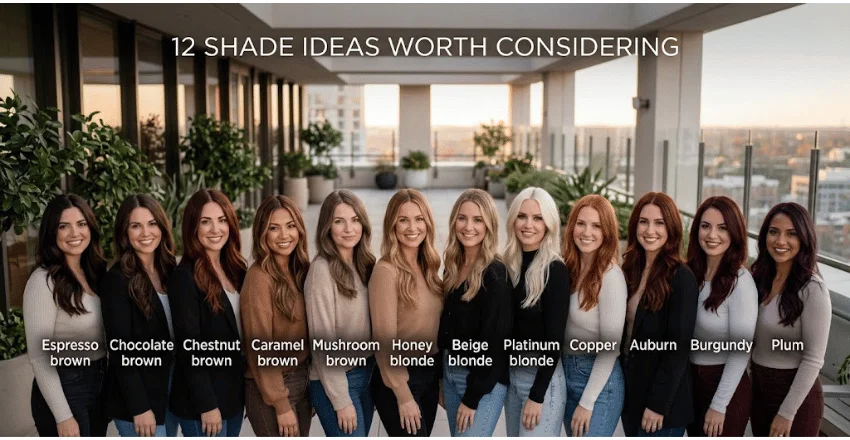
- Espresso brown. A deep brunette creates strong definition without the flatness that can come with an intense black.
- Chocolate brown. This balanced brunette can be adjusted warmer or cooler, making it a flexible choice across many complexions.
- Chestnut brown. Chestnut mixes brown with warm red or golden notes. It adds richness without moving fully into red.
- Caramel brown. Caramel brings golden warmth to brunette hair and works well as highlights, ribbons, or an all-over warmer tone.
- Mushroom brown. This muted brunette uses cooler beige and ash notes. It suits people who prefer a softer, less golden finish.
- Honey blonde. Honey blends blonde with warm gold. It creates a softer effect than a pale icy blonde.
- Beige blonde. Beige sits between strongly warm and strongly cool blonde tones. It can be a balanced choice for neutral undertones.
- Platinum blonde. Platinum creates one of the strongest transformations. It also asks for more lightening, toning, and maintenance than deeper shades.
- Copper. Copper ranges from soft ginger to bright orange-red. Warm versions can add clear contrast and energy to a simple cut.
- Auburn. Auburn combines brunette depth with red warmth. It can feel less intense than bright red while still creating a noticeable change.
- Burgundy. This deep red-violet family can appear subtle on a dark base or brighter on pre-lightened hair. Compare StyleVanta’s burgundy colour ideas if you are choosing between wine, berry, and plum directions.
- Plum or purple. Deep plum can add a coloured tint to brunette hair, while brighter violet shades become more visible on a lighter base.
Which Commitment Level Makes the Most Sense?
Each colouring method solves a different problem.
Permanent colour
- Good for lasting darker changes and grey coverage.
- Offers more staying power.
- Creates visible root regrowth.
- Can be harder to correct if you change your mind.
Semi-permanent colour
- Good for tonal changes and experimentation.
- Usually fades gradually.
- Does not offer the same lightening ability as oxidative permanent colour.
- May need refreshing for steady vibrancy.
Temporary colour
- Good for short experiments, events, or accents.
- Requires the least commitment.
- Usually has limited durability.
- Results can vary with hair porosity and starting colour.
Verdict: If you’re unsure, start near your natural depth or use a lower-commitment formula. Choose permanent colour when lasting coverage or a long-term darker shade is the goal. Save platinum and major vivid transformations for times when you’re prepared for more upkeep and possible professional lightening.
Mistakes That Can Make a Good Shade a Bad Choice
Choosing from the model photo alone is the first mistake. Packaging can help you picture a colour family, but your starting shade affects the result.
Don’t ignore previous colouring. Old permanent pigment, bleach, highlights, and uneven porosity can change how a new application develops.
Think about upkeep before chasing contrast. A shade close to your natural depth usually makes regrowth less obvious than a major light-to-dark or dark-to-light change.
Follow the product instructions every time. Complete any required allergy test and strand test before a full application. Stop using a product if you experience a concerning reaction.
Pick the Shade You Can Maintain
The right colour should work after the first photo, not only on colouring day. Start with your base, check your undertone, and be realistic about maintenance.
If you’re torn between two shades, choose the one that best suits your preferred level of commitment. You can always make a future change once you know how much upkeep feels comfortable.
Frequently Asked Questions
How do I choose hair dye colors without seeing the result first?
Start with undertone, current depth, and the amount of maintenance you want. Compare several reference photos with a similar starting colour rather than relying on one package image. A strand test can also help you preview the result when the product instructions recommend one.
Do I need bleach for purple hair?
Not always. Deep plum or violet can show as a tint on darker hair. Bright, pastel, or highly vivid purple usually appears more clearly on a lighter base.
Which colour is easiest to maintain?
A shade close to your natural depth is usually easier to live with because new growth creates less contrast. Blended brunette and softly dimensional colour can also create a gentler grow-out.
Can cool undertones wear warm colour?
Yes. Undertone guidance helps narrow choices, but it isn’t a strict rule. You may prefer deliberate contrast, or you may look better in a balanced shade that mixes warm and cool notes.
How often will I need to refresh my colour?
It depends on the formula, your growth rate, the contrast at your roots, and how quickly the tone fades. A vivid fashion colour may need refreshing sooner than a shade close to your natural base.